
In a galaxy of ever-expanding live-service titles, the occurrence of bugs, exploits or any other unintentional typo seems inevitable. At first glance, this might sound like a purely negative thing… Yet, some developers manage to play this situation to their advantage! The latest example is that of Arrowhead Game Studios who spontaneously turned a Helldivers 2’s backend error into an emerging storytelling opportunity.
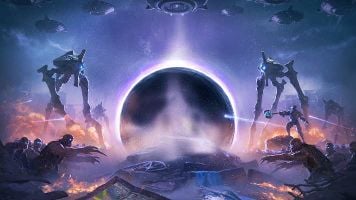
When a bug caused planet liberation rates to spiral out of control, the studio didn’t just issue a dry apology – they spun the incident into a satirical in-universe announcement, suggesting that any anomalies were merely the result of “potential Illuminate mind influence”. This kind of ingenious twist is not unprecedented in the MMORPGs and live-service titles history.
Historical precedents
Others, before Arrowhead Game Studios, have leveraged bugs, glitches and sometimes even the server’s shutdown to incorporate emergent player actions into their official stories.
Ultima Online
One of the earliest examples dates back to an Ultima Online beta stress test in 1997, when Lord British – the character of Richard Garriott, a developer, but above all, the “ruler of Britannia” – was murdered in front of hundreds of witnesses. On August 8 (one month before the title’s official release), Richard organized a “royal visit” to encourage testers to get online and, more importantly, to gather in one place in order to challenge the servers’ capacity.
Of course, on such a visit, it’s unthinkable for a lord to be on an equal footing with his subjects. Accordingly, Richard protected his character with an invulnerability command – or so he thought. Unfortunately for him (or fortunately for Ultima Online’s sandbox ethos), the invulnerability property resets on server reboots, which, as you’ve probably already guessed, happened just before his appearance.
That’s where Rainz, an opportunistic thief, comes in. Noting that the guards were deactivated for the event (in anticipation of lags), Rainz wasted no time in rummaging through the guests’ bags. There he found a fire field scroll which he used to try his luck on Lord British, expecting failure.
Via MassivelyOP:
“I desperately searched the backpacks of those around me and eventually came upon a fire field scroll. After that it was pretty simple: I just cast the scroll on the bridge and waited to see what would happen. Either [Lord British] or Blackthorne made the comment, ‘Hehe nice try!’ – I can’t recall exactly who. It was a humorous sight and I expected to be struck down by lightning or have some other evil fate befall me. Instead I heard a loud death grunt as British slumped to his death.”
To everyone’s surprise, the scroll cast actually caused the death of the ruler of Britannia. The regicide took everyone by surprise, including both Rainz and Lord British themselves. In response, Lord Blackthorne (who accompanied Lord British on this visit), summoned four demons to slaughter the entire party – not knowing, at the time, who the real culprit was. Decades later, Lord British’s assassination remains a defining moment from the history of MMORPGs, demonstrating that the most memorable narratives often write themselves through player action and developer adaptability.
Tabula Rasa
The untimely end of Tabula Rasa, a sci-fi MMO, also made by Richard Garriott, is another good example of this phenomenon. As the servers prepared to go dark in February 2009, the developers orchestrated a climactic two-phase assault where players made their last stand against the overwhelming Bane forces. Some developers even took personal control of elite NPCs. By using the server shutdown as a pretext for a final invasion, the developers cleverly turned what would otherwise have been a tragic but forgetful event into a memorable anecdote. Thus preventing the MMORPG’s name to fall into oblivion.
City of Heroes
Community initiatives can also be part of the lore of an MMORPG. As is typically the case after the closure of an online game, fans take it upon themselves to keep the project alive via private servers. This is exactly what happened to City of Heroes after its closure in 2012. In fact, these private servers were so popular that one of them gets officially licensed by NCSoft to run and develop the game!
Even more surprising, these license-related setbacks have been integrated into the City of Heroes narrative: for instance, Homecoming (the server that has been made official) now frames its existence as an alternative timeline of Paragon City. In fact, the closing and relicensing of the title are an integral part of its history, proving that the life (and afterlife) of an MMORPG can be shaped as much by its community as by its developers.
Emergent storytelling
Developers who embrace the emerging actions of their players and communities, and integrate them cohesively into their universes, succeed in creating a real sense of belonging to said universes. As we’ve seen, whether it’s exploits, server closures, or events taking place outside the official boundaries, the way players hijack these elements is a genuine lever of engagement and allows these stories to stand the test of time.
Arrowhead’s handling of the Helldivers 2 liberation bug demonstrates how even a minor disruption can be reframed as part of the lore. By treating the error as an in-universe anomaly – rather than a mere technical failure – they strengthened their satirical tone while cementing immersion. This approach not only mitigates frustration but also strengthens the bond between developers and their audience.
While we tend to seek perfect gaming conditions, these few stories put into perspective that our most memorable souvenirs sometimes come from unexpected situations. In the end, the best stories are often the ones no one could have planned. I’ll conclude by saying that the most successful developers will be those who recognize their mistakes and handle them creatively.