
The upcoming release of Erenshor, a single-player “MMORPG” populated entirely by NPCs, might seem like a contradiction at first glance. Yet, it reminds me of a phenomenon we’ve seen for years: the gradual erosion of the social core of the genre. While classic MMORPGs like EverQuest and early World of Warcraft were praised for their cooperative gameplay, modern iterations increasingly cater to solo players.
I remember with nostalgia spending long nights on World of Warcraft, gathering groups to attack opposing faction capitals. These deeply social activities are now greatly hindered by the emergence of virtualization technologies such as sharding. Which, by the way, is also challenging the very concept and identity of servers.
In the same vein, systems like WoW’s followers in The War Within or the Delves depict this shift, where multiplayer interactions are streamlined—or even optional. Erenshor takes this evolution to its logical extreme, offering a fully solo experience that mimics the MMORPG format. But does this shift represent an evolution to meet player demands, or does it consecrate a surrender of the genre’s defining social spirit?
The best (or the worst?) of both worlds
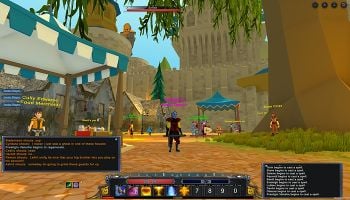
I frowned when I read that Erenshor is a “single-player nod to the MMORPGs of the past”, designed to replicate the grind, loot cycles, and even the social dynamics of online RPGs—without requiring actual human interaction. Its key concept lies in its “SimPlayers”, NPCs that mimic real players by leveling up, forming groups, trading items, and even – as funny as it sounds – trash-talking in global chat.
You might ask, if these interactions don’t involve any real players, then what’s the point? Developer Brian “Burgee” explains that the idea was born from nostalgia for EverQuest and the frustration of balancing MMO commitments with adult responsibilities.
This concept isn’t entirely new—titles like Kingdoms of Amalur: Reckoning originally began development as part of Project Copernicus, a canceled MMORPG. However, Erenshor distinguishes itself by going beyond mere structural remnants of MMO design, since it’s unique in its deliberate simulation of multiplayer dynamics. The SimPlayers are handcrafted with distinct personalities, from the server jerk to the overenthusiastic roleplayer, all based on real players Burgee encountered in his MMO days. The result is a world that feels alive, yet entirely devoid of genuine human unpredictability.
The Dilution of Multiplayer in MMORPGs
The existence of Erenshor prompts us to wonder: If an MMORPG can operate without real players, what does that say about the genre’s current state? Modern MMORPGs have long been moving toward solo-friendly design. World of Warcraft’s dungeon finder system reduce the need for social coordination, while Final Fantasy XIV’s Duty Support allows players to achieve group content with AI companions. These changes cater to time-poor players but often result in transactional gameplay where communication is minimal, at best.
The irony is that while these systems make MMORPGs more accessible, they also strip away the spontaneous social interactions that once defined them. Erenshor has fun pushing this assertion to its utmost degree, but for many people, me included, this phenomenon is absurd. MMORPGs are a unique category of games, obeying their own specific rules. The transgressions we’ve tolerated over the years have already greatly warped the definition of the genre. Now, if players are willing to accept simulated interactions, do the ‘massively multiplayer’ aspects still mean anything at all?
The Contrast with Cooperative RPGs
While MMORPGs lean into solo play, cooperative RPGs like Monster Hunter Wilds are paradoxically experimenting the other way around. In these games, multiplayer is optional but purposeful—you team up by choice, not necessity, fostering organic camaraderie rather than forced grouping. If you think about it, we’re in this weird situation, where some cooperative RPGs can offer a more meaningful social experience than so-called MMORPGs.
To my mind, this observation is part of the global picture – which leads me to the conclusion that we are standing at a moment of fracture for the MMORPG genre. When we look at the upcoming projects, some stand out for the persistence of their universe, the scope of their confrontations, and the omnipresence of social interactions, so dear to the original definition of the genre. Whereas others focus on accessibility and “fun”, seeking, in the end, to be good games rather than good MMORPGs – while trying to benefit from the aura that this label gives them.
Is the Genre Losing Its Social Soul?
Nevertheless, the success of Erenshor—already generating buzz ahead of its April 14 Early Access launch —suggests there’s an audience for this hybrid experience. All the more underlining a change in players’ expectations. Modern gamers (in part) prioritize convenience and flexibility over communal play. Erenshor caters to this demographic by preserving the grind and progression of MMOs while eliminating their social friction.
Erenshor doesn’t just simulate players; it holds up a mirror to the genre, asking whether the future of MMORPGs lies in community—or in comfortable solitude. As it prepares for launch, it remains to be seen whether it will be remembered as a quirky experiment or a harbinger of things to come.
From this evolving landscape, I’m certain of one thing: MMORPGs—true “Massive” and “Multiplayer” experiences, as they were once known—are unlikely to vanish entirely. While modern trends push toward casualization and the erosion of traditional constraints, a persistent demand exists for titles that recapture the genre’s social and communal roots, evidenced by the fervent support to Kickstarter campaigns promising to “restore MMORPGs to their former glory”. Their success, of course, remains uncertain.
What I think is inevitable, however, is further fragmentation. The genre now spans a spectrum: MMO-lites borrow the grind and progression loops of MMOs but abandon their defining criteria; mainstream MMORPGs increasingly drift from foundational pillars like persistence and scale; and a dwindling few “real” MMORPGs still strive to deliver truly massive, unsharded worlds. Adding to the complexity, cooperative RPGs—with their social hubs and optional multiplayer—are embracing the very communal aspects that modern MMOs often neglect.
In this divided era, Erenshor stands as both a parody and a reflection: a single-player “MMO” that exposes how far the genre has strayed from its origins—and how deeply players still crave those origins, even if only in simulated form.